How long do modular buildings last? The answer depends on design, materials, maintenance, relocation, and local climate. A permanent modular building can often serve for 50 years or more, matching the expected life of many conventional buildings. However, no responsible expert should promise one fixed number.
The Modular Building Institute’s Permanent Modular Construction Annual Report explains that permanent modular buildings follow the same building codes as site-built structures. Its industry evidence shows that factory production can improve consistency through controlled assembly and documented quality checks. The National Institute of Building Sciences also highlights durability, maintainability, and whole-life performance as essential factors in building decisions. These reports support a practical conclusion: construction method matters, but management matters more.
Dr. Ryan E. Smith, an offsite construction researcher and author, stated, “Modular construction is not a building type; it is a process.” That distinction is important. A steel-framed classroom with protected joints may remain useful for decades. A poorly maintained unit can deteriorate much sooner, especially around roofs, seals, plumbing, and transport connections. Small details matter.
So, what is the lifespan of modular buildings? A realistic estimate is often 30 to 60 years, with some permanent structures lasting longer. Temporary units may have shorter service periods. The honest limitation is clear: industry averages cannot replace a project-specific inspection. Lifespan is earned over time, not guaranteed on delivery day.
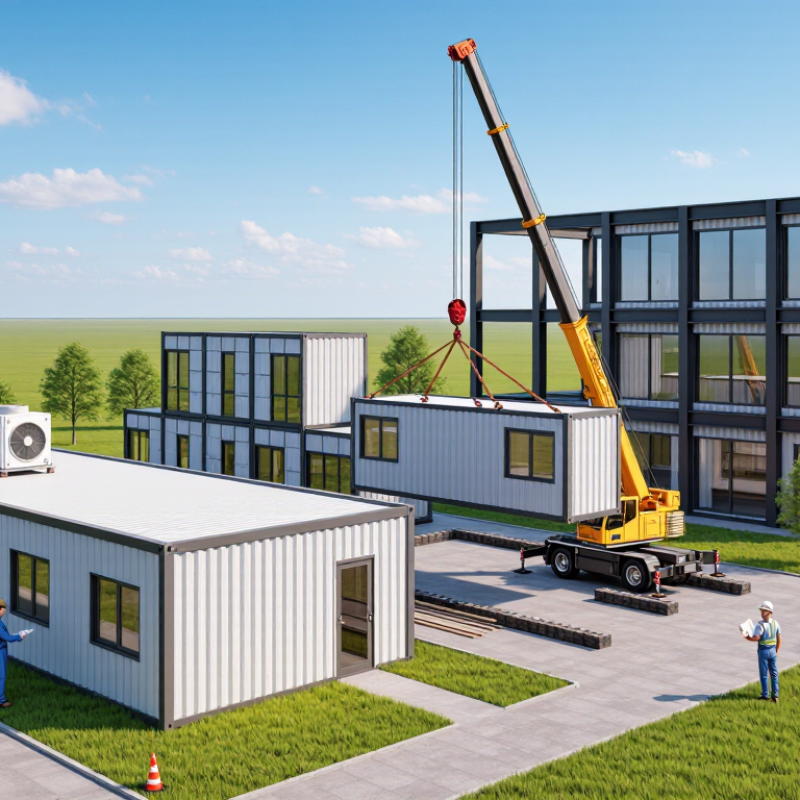
How Long Do Modular Buildings Last?
Factors That Determine How Long Modular Buildings Last
A modular building can last 30 to 60 years, but its service life depends on several connected factors. A strong design, suitable materials, and accurate factory construction create a reliable starting point. However, a good start does not guarantee a long life. Poor drainage, weak foundations, or repeated moisture exposure can cause damage much earlier.
Climate has a major influence. Coastal air may accelerate corrosion, while freezing temperatures can stress joints and plumbing. Heavy snow, strong winds, and frequent temperature changes also affect structural performance. The building’s use matters too. A busy classroom may experience more wear than a lightly used office. Engineers should match the design loads to the site and daily activity.
Maintenance often determines whether small defects become expensive repairs. Roof inspections, seal replacement, ventilation checks, and prompt leak repairs help protect the structure. Relocating a modular building can shorten its life if lifting points, connections, or foundations are handled poorly. Qualified professionals should inspect these areas after installation and movement. Even careful predictions can be wrong. A building may look sound while hidden moisture weakens insulation or framing. Keeping inspection records supports better decisions, although records alone cannot replace practical checks.
| Factor | Typical Service-Life Impact | What Determines the Outcome | Recommended Practice |
|---|---|---|---|
| Construction Type | Temporary: 5–15 years Permanent: 30–60+ years |
Temporary units are usually designed for relocation or limited-duration use. Permanent modular buildings are engineered to meet applicable building codes and can have service lives comparable to conventional buildings. | Confirm whether the building is designed for temporary, relocatable, or permanent occupancy before purchase or installation. |
| Structural Frame and Materials | Major influence on total life | Galvanized or protected steel frames generally resist insects, warping, and rot. Timber-framed modules can also last for decades when kept dry and properly protected. | Review structural specifications, corrosion protection, connections, and the quality of the building envelope. |
| Foundation and Ground Conditions | Can shorten life significantly if defective | Uneven settlement, poor drainage, frost movement, and inadequate anchoring can cause cracking, distortion, water intrusion, or stress on connections. | Use a site-specific foundation design, provide positive drainage, and inspect supports and anchors regularly. |
| Climate and Weather Exposure | Often reduces life without protection | Humidity, salt air, freeze-thaw cycles, high winds, heavy snow, ultraviolet radiation, and extreme temperatures affect cladding, roofing, seals, coatings, and structural components. | Select materials for the local climate and inspect exposed components more frequently in coastal, wet, snowy, or high-wind locations. |
| Moisture Management | Critical to avoiding early deterioration | Leaks, condensation, blocked gutters, plumbing failures, and poor ventilation can cause mold, corrosion, timber decay, insulation damage, and indoor-air-quality problems. | Maintain roofs, flashings, gutters, seals, vapor-control layers, ventilation, and plumbing promptly. |
| Roofing System | Approximately 15–30 years for many systems | Roof life depends on the roofing material, installation quality, drainage, foot traffic, weather exposure, and maintenance. The roof may require replacement before the primary structure. | Keep drainage clear, repair small defects early, and replace the roof system when deterioration becomes widespread. |
| Exterior Cladding and Finishes | Approximately 15–40 years, depending on material | Paint, sealants, siding, panels, and protective coatings gradually deteriorate from moisture, sunlight, impact, and temperature changes. | Clean surfaces, renew coatings and sealants, and replace damaged panels before water reaches the wall assembly. |
| Mechanical, Electrical, and Plumbing Systems | Typically 10–25 years for major equipment | Heating and cooling equipment, water heaters, pumps, wiring accessories, fixtures, and plumbing components often need replacement several times during the building’s structural life. | Follow manufacturer maintenance schedules and budget for planned replacement of building services. |
| Quality of Manufacturing and Installation | High impact on durability | Accurate fabrication, protected transport, correct module joining, weather-tight connections, and code-compliant installation reduce defects and future repairs. | Use documented quality-control procedures, qualified installers, and independent inspections where appropriate. |
| Maintenance and Inspections | Can extend useful life by decades | Routine inspections identify leaks, corrosion, settlement, damaged finishes, and failing equipment before minor issues become structural or expensive problems. | Perform seasonal inspections and keep written records of repairs, replacements, moisture incidents, and service work. |
| Adaptability and Renovation | Can extend functional life beyond the original use | Modular buildings can often be reconfigured, extended, reclad, or upgraded. The feasibility depends on structural capacity, module connections, utilities, and current building regulations. | Assess structural and code requirements before adding floors, removing walls, relocating modules, or changing occupancy. |
| Overall Expected Service Life | About 30–60+ years for well-maintained permanent buildings | Service life is not determined by the modular method alone. Design quality, materials, site conditions, climate, installation, maintenance, and renovation history all contribute. | Evaluate the complete building system rather than relying solely on a generic lifespan figure. |
A modular building can last 30 to 60 years with suitable materials, sound foundations, and regular maintenance. A building may last less. These figures are practical ranges, not guarantees.
Design quality, materials, climate, foundation strength, building use, and maintenance all influence service life. Poor drainage or repeated moisture exposure can cause early damage.
Temporary modular offices commonly last 10 to 25 years. Frequent relocation and lighter finishes may shorten their useful life.
Modular classrooms often serve for 20 to 40 years with regular roof and ventilation care. Heavy daily use increases wear on floors, doors, and plumbing.
Yes, permanent modular homes can exceed 50 years with strong foundations and timely repairs. That estimate can fail when hidden moisture weakens framing.
Coastal air may accelerate corrosion, while freezing temperatures can stress joints and plumbing. Heavy snow, strong winds, and rapid temperature changes also increase structural demands.
Inspect roofs, flashing, seals, gutters, drainage, and floors at least twice each year. Replace cracked sealant quickly. Keep ventilation paths clear. Repair leaks promptly.
Watch for stains, soft flooring, musty odors, sticking doors, and unusual floor movement. A clean interior can hide corrosion below the floor. Moisture is quiet.
Yes, poor lifting, damaged connections, or unsuitable foundations can reduce structural performance. Qualified professionals should inspect lifting points and foundations after relocation.
Records show when inspections and repairs occurred, supporting better maintenance decisions. They cannot replace practical checks. Plans also fail when nobody owns the responsibility.
What is the lifespan of modular buildings? In general, modular buildings can provide many years of dependable service when they are designed for their intended use, built with durable materials, and installed on a suitable foundation. Their longevity depends on factors such as construction quality, climate, structural design, building use, moisture control, and the standard of ongoing maintenance. Different types of modular buildings may have different expected lifespans, with temporary units typically serving shorter periods than permanent structures designed for long-term occupancy.
Compared with traditional construction, modular buildings can offer similar durability when properly engineered and maintained, while also providing greater flexibility. Regular inspections, roof and exterior repairs, moisture prevention, equipment servicing, and timely upgrades can significantly extend their useful life. When needs change, a modular building may be renovated, relocated, expanded, or adapted for another purpose instead of being immediately replaced. At the end of its service life, components can often be repaired, reused, recycled, or responsibly dismantled, making thoughtful planning important throughout the building’s entire lifecycle.

 Shupshy Container